


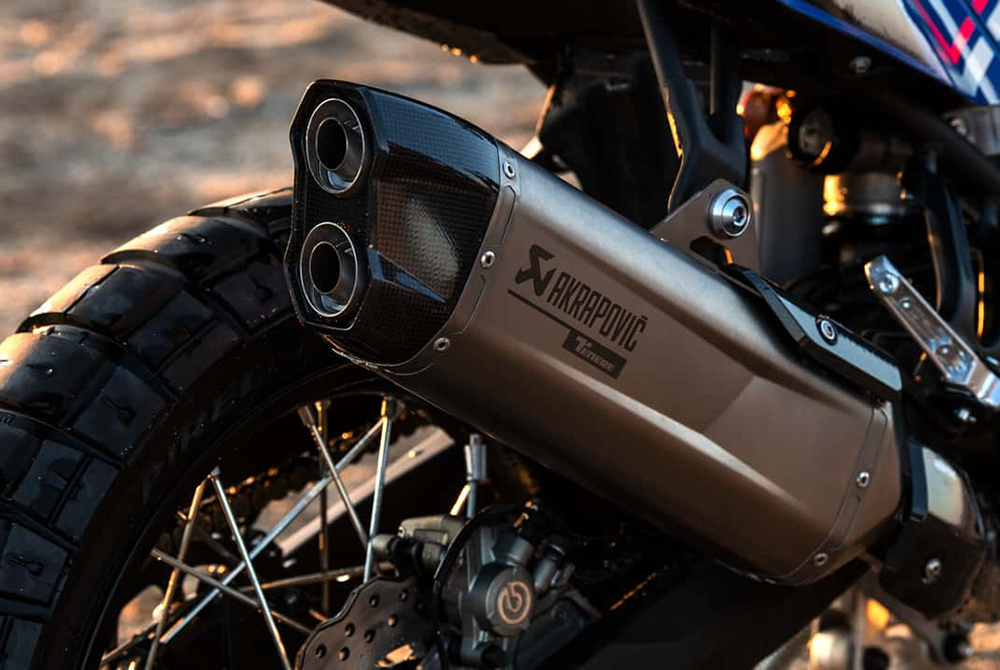

For many touring motorcycle riders, upgrading to an aftermarket exhaust is a tempting modification. Whether for better performance, weight reduction, or an enhanced sound, aftermarket exhausts can transform the riding experience. However, there are downsides and legal considerations to keep in mind, especially for long-distance riders traveling across different regions.

Benefits of Aftermarket Exhausts on Touring Motorcycles
✅ Increased Performance
Many aftermarket exhausts reduce backpressure and improve airflow, resulting in a small horsepower boost and better throttle response. This can be particularly useful when carrying luggage or riding on steep terrain.
✅ Weight Reduction
Stock exhausts are often heavy due to catalytic converters and sound-dampening materials. Aftermarket options, especially titanium and carbon fiber models, can shed several kilograms, improving handling and fuel efficiency.
✅ Enhanced Sound
A deeper, more aggressive aftermarket exhaust note can make your bike sound more powerful and refined. Some riders prefer a louder exhaust for safety, as it increases their presence in traffic.
✅ Aesthetics & Customization
From polished stainless steel to carbon fiber finishes, aftermarket exhausts can enhance the look of your motorcycle, giving it a sportier and more aggressive appearance.
Downsides of Aftermarket Exhausts
❌ Legal & Noise Issues
Many aftermarket exhausts exceed legal noise limits (typically around 80-100 dB, depending on location). This can lead to fines, penalties, or an MOT failure in some countries.
❌ Potential Loss of Low-End Torque
Some aftermarket exhausts improve high-end power but reduce low-end torque, which is crucial for touring motorcycles that carry heavy loads.
❌ Fuel Mapping & Tuning Required
To maximize performance and avoid running too lean, installing an aftermarket exhaust often requires an ECU remap or fuel controller, adding extra cost and complexity.
❌ Environmental Impact
Removing the catalytic converter (decat) can increase emissions, making the bike non-compliant with Euro and EPA regulations. This is illegal in many regions and can affect resale value.

Legal Requirements in the UK, USA & EU
🛑 United Kingdom (UK)
- Aftermarket exhausts must meet UK noise regulations (typically under 80-86 dB).
- Removing the catalytic converter is illegal for road use.
- If an exhaust is “Not for Road Use” or “Race Use Only,” it will fail an MOT test.
- Police and DVSA roadside checks can result in fines and mandatory exhaust replacement.
🛑 United States (USA)
- Noise limits vary by state (typically 80-95 dB). California (CARB) has strict emissions laws.
- Many states require EPA-approved exhausts, and removing emissions components is federally illegal.
- Some states, like New York, enforce loud exhaust laws more strictly than others.
🛑 European Union (EU)
- Exhausts must comply with Euro 5 regulations (for bikes registered after 2020).
- EC-approved exhausts with a certification stamp are required for street use.
- Many countries (Germany, France, Italy) conduct random roadside noise and emissions tests, with fines for non-compliance.
Should You Upgrade?
If you ride long distances and cross borders frequently, choosing a legal, EC/EPA-approved exhaust is the safest option. A high-quality system with removable dB killers and proper tuning can provide performance benefits without legal trouble.
🚀 Best Advice: Always check local laws, choose a reputable brand, and ensure your bike remains road-legal to avoid fines, breakdowns, or MOT failures.


